
As each puppy finds its new home, and adjusts to its new routine, there are things that can make training and learning much easier for the family and the puppy. I thought I might share some of the tips that I have picked up either by reading, from friends, or the hard way – experience. 🙂

1) Be Consistent.
Consistency goes a long way in training. Use the same word for the same command every

time. This way the puppy will not have to get confused learning several words and motions for “sit”. Consistency is also vital in potty training. Most puppies have to go soon after drinking water, and then about 1-2 hours after eating. So if you regulate their intake, and take them out to the same spot around the same times they should get the idea. I like to feed twice a day, and take them out in the morning, around 10, in the afternoon, and before bed.
2) Keep it short.
When training, keep your lessons short. The puppy will remember and absorb more if all its attention is on you. After about 5 minutes this will start to wane, and less is learned. A five to ten minute session once a day will do wonders, and accomplish much more then a long weekly lesson. A good trick is to train at feeding time too – you have a big bowl of reward they will do anything to get!
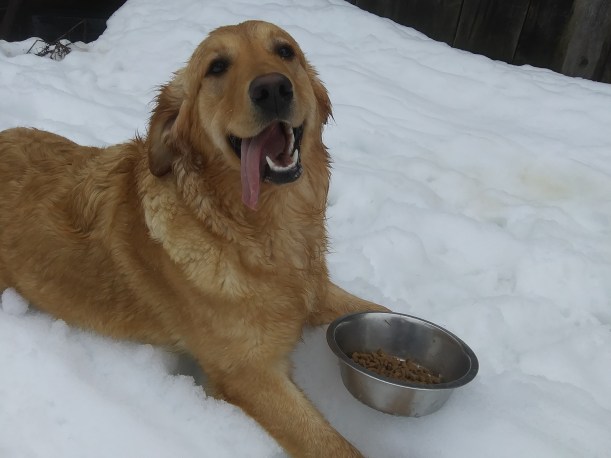
3) Reward.
With some dogs, praise is enough. But sometimes, especially for a puppy, a treat has  higher value. When you introduce a new concept/command, reward as soon as it is done. If it is a difficult trick, reward as soon as they even try to do it (even if it is incomplete). Eventually, reward only for perfect obedience, then only after a series of tricks; replacing the normal treat after each with a cue word like “Good!” or “Yes!” so they know they are doing well.
4) Train for immediate obedience.
We all have had or known that dog who is “deaf”. This is avoidable. What has happened is the owner has subconsciously taught the dog not to obey on the first command. When we repeat the command over and over the dog soon learns it only has to obey the second time, or maybe longer! It avoids obedience until finally it hears you are getting upset, and if it doesn’t respond it will have big trouble… This isn’t what either of us wants!
Once they don’t have the excuse of not knowing the command, expect immediate obedience. If they are determined to ignore you, enforce the command. A few seconds after commanding “sit”, I say “no, sit” then push them into sit, or catch them for the “come”, etc. Then you still treat them for the trick. Obedience, no matter what is rewarded. If the dog comes after a while, or you were chasing it and it came eventually; as much as you want to – don’t reprimand – or it will never come when you are mad!
I am still working on consistency with this step. 🙂
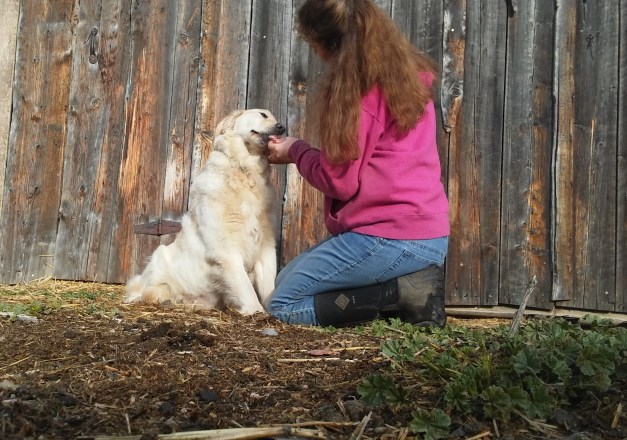
5) Live your training.
Throughout the day little training moments arise. Have your puppy sit for petting, let you through the door first, or patiently watch and wait for their food. Little manners like these are best taught in the moment, and over time they will become natural. We tend to only expect good behavior during training, but puppies can and should have good

manners. A little effort invested now to teach and correct will be so rewarding for the rest of your dog’s life! These little puppies do not have to do much, and we feed, house, and adore them! We can ask that they remember their manners.
One of my favorite books on dog training has been “The Family Dog” by Richard A. Wolters. It is straight forward, incorporates the kids, and is packed with useful information. Here is it on Amazon.
I hope some of this is helpful, and that you are enjoying your new pet. 🙂
~Ann

 Rosehaven Homestead
Leave a comment